


Jump to: Why Go | How to Do It | Flights | Car Hire | Stay | Route | Driving Tips | FAQs
Atlantic Ocean Road, Norway: Why It’s a Bucket List Drive
The Atlantic Ocean Road, Norway isn’t just a drive — it’s one of those rare journeys that feels completely different to anything else in the world. Stretching across small islands on Norway’s wild west coast, this short but unforgettable route delivers dramatic ocean views, sweeping bridges, and constantly changing weather that transforms the experience every time you visit.
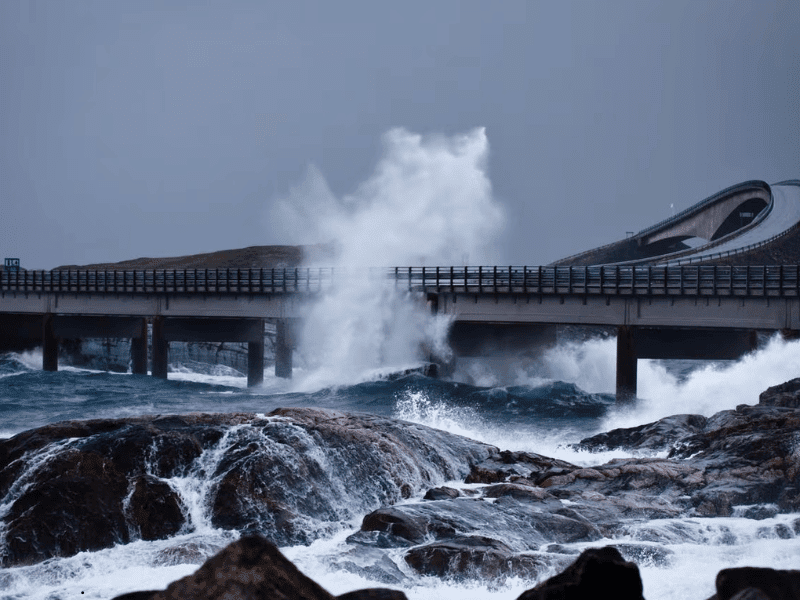
It doesn’t feel like a road along the coast — it feels like a road right at the edge of the sea, where the land simply runs out and the Atlantic takes over. One moment you’re on solid ground, the next you’re crossing open water with nothing but horizon on either side.
💡 Fun Fact: Often called one of the world’s most beautiful drives, the Atlantic Ocean Road connects a chain of islands via 8 bridges, including one that appears to vanish into thin air thanks to a clever optical illusion.
🌊 Why It’s a Bucket List Drive
There’s something about the Atlantic Ocean Road that quietly builds as you drive it. The landscape shifts constantly, on calmer days, the sea feels almost still, reflecting the sky and softening the edges of the islands around you. It’s peaceful, almost cinematic. Then the weather changes — and suddenly the entire drive feels different. Wind sweeps across the road, waves crash against the rocks, and the Atlantic reminds you exactly where you are.
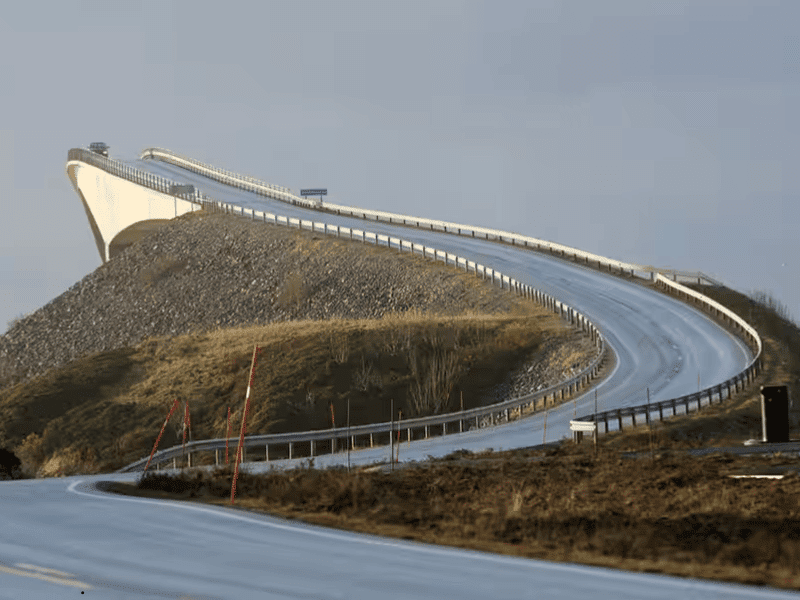
The most famous section — the curved Storseisundet Bridge — appears almost impossible at first glance. From the right angle, it looks like the road simply disappears into the sky. There’s a moment as you approach it where your brain hesitates, just for a second. It’s not dangerous — but it definitely gets your attention.
💡 Fun Fact: The Atlantic Ocean Road is officially recognised as a Norwegian National Tourist Route and was named the country’s Construction of the Century.
🚗 How to Do the Atlantic Ocean Road (Air-Holiday Style)
The Atlantic Ocean Road works best when it’s part of a wider journey rather than a quick stop. Most people experience it travelling between Kristiansund and Molde, and both make strong bases depending on how you want to shape your trip.
✈️ Flights
Flying into either Kristiansund or Molde is straightforward, but it’s worth knowing that direct flights from the UK are very limited. In most cases, you’ll need to connect via a larger Norwegian hub such as Oslo or sometimes Bergen. We thought both were nice, simple airports to navigate.
Flights run year-round, but routes can be more frequent during the summer season when demand is higher. Using platforms like Trip.com makes it easier to compare connections and find the best timings.
Kristiansund is slightly closer to the northern end of the drive, while Molde works well if you’re planning to continue further into Norway’s fjord regions. If you’re looking for more direct options, flying into Oslo and continuing with a short domestic flight — or even turning it into a longer road trip — can work just as well.
🚗 Car Hire
This is one of those trips where having your own car isn’t just helpful — it’s essential. The Atlantic Ocean Road Norway is all about the journey, and you’ll want the freedom to stop, turn around, and explore at your own pace.
Using Economy Bookings allows you to compare providers and secure something that suits your trip, and it’s always worth pre-booking to get the best availability and pricing, especially during peak travel periods. For extra peace of mind, especially on a coastal route where conditions can change quickly, arranging additional cover through Bettersafe before your trip can help protect against the unexpected — giving you one less thing to think about once you’re on the road.
Driving in Norway is generally straightforward, but Norway has its own pace and conditions — from changing coastal weather to exposed bridges and quieter single-carriage roads. It’s part of what makes the experience so memorable, but also something to be aware of before setting off.
💡 Tip: If you’re not used to driving abroad, it’s worth reading our Driving in Norway section before you go so you know what to expect from road conditions, weather, and local driving style.
🚗 Choosing the Right Car
Choosing the right car can make a big difference to your experience on the Atlantic Ocean Road Norway. For most travellers, a compact or mid-size car is ideal — easier to handle on narrower coastal roads and more efficient for longer distances. If you’re travelling outside of peak summer or planning to explore more remote areas, it’s worth considering a vehicle equipped for changing conditions. Norway is also very EV-friendly, with charging points widely available, making electric cars a great option if you’re comfortable planning charging stops along your route.
💡 Tip: A smaller car is often the easiest choice for routes like this, especially when roads narrow or weather conditions change.
🏨 Accommodation
Starting in Kristiansund gives you a natural introduction to the coastline. The town itself is spread across islands, so you’re already surrounded by water before you even reach the road. It’s a great place to slow things down and settle into the rhythm of the trip. You’ll find a good mix of stays here, from flexible hotel options to more private, self-catering options.
💡 Tip: An overnight stay in Kristiansund lets you drive the route early, when it’s quieter and the light is at its best.
Further along, Molde makes an excellent second base. The scenery shifts here into fjords and mountains, giving you a completely different perspective after the exposed coastal drive.
📍 Things to Do Along The Atlantic Ocean Road
As you leave Kristiansund behind, the road begins to shift. You’ll pass through smaller coastal areas like Kårvåg, where the connection between land and sea feels even closer, before reaching the chain of islands that form the heart of the Atlantic Ocean Road. This is where the drive really comes into its own. The bridges carry you from one stretch of land to another, sometimes so smoothly you barely notice — except for the constant presence of the ocean on either side.
You’ll notice cars pulled over along the route — and for good reason. There are several viewpoints and stopping points where you can step out, walk along the coastline, and experience the road from a different perspective. Some of these stops are even designed with modern Norwegian architecture, blending into the landscape rather than taking away from it.
Fishing is also part of the experience here. You’ll often see people casting lines from the bridges or nearby rocks, adding to the sense that this is still very much a working coastal environment — not just a scenic route.
As the route continues, it gradually reconnects with the mainland near Vevang, where the intensity of the ocean begins to ease. From here, many travellers continue south towards Molde, where the landscape opens out and the pace slows again.
💡 Tip: If you have time, drive the route in both directions — the experience changes depending on the light, weather, and direction of travel.

Driving in Norway: What You Need to Know
Driving the Atlantic Ocean Road feels very different – roads are quieter, the scenery is bigger, and everything moves at a slightly slower pace — but there are a few things worth knowing before you set off.
If you’re visiting from the UK, you can drive using your full licence without needing an international permit. Roads are well maintained and clearly marked, especially around this region, making it an easy place to drive even if it’s your first time in Norway. What stands out most is how calm the driving feels. Speed limits are generally lower than many people expect and are strictly followed, especially outside towns where roads can narrow and wind along the coastline. You’ll often come across passing places for oncoming traffic, and it quickly becomes part of the rhythm of driving here.
There are a few key differences to be aware of:
- Dipped headlights must be used at all times, even during daylight hours
- Norway has very strict drink-driving laws, so it’s best to avoid alcohol completely if you’re planning to drive
- Mobile phone use while driving is also prohibited unless fully hands-free
- Most roads operate automatic toll systems, so you won’t need to stop — charges are usually handled through your rental provider or billed afterwards, which makes things much easier once you’re on the road
Norway’s driving culture places a strong emphasis on safety and awareness. Pedestrians and cyclists are given priority, and if someone is waiting at a crossing, drivers are expected to slow down or stop.
Weather is the biggest factor – check the weather before setting off, you’ll want to be prepared for anything. Conditions along the coast can change quickly, even in summer. One moment it’s clear, the next you’re dealing with wind, rain, or reduced visibility. In summer you won’t need snow chains, but outside peak season winter tyres are essential, and in colder conditions chains may be required. Studded tyres are permitted between November and the first Sunday after Easter, depending on conditions. That unpredictability is part of what makes the Atlantic Ocean Road so unique.
Norway is also one of the easiest countries in the world to drive electric, with charging points widely available across the country, making it a strong option if you’re considering an EV for your trip. If you’re driving a petrol or diesel car, fuel stops can be more spaced out, so it’s worth planning ahead. Staying connected helps if you’re navigating or checking live conditions. A travel SIM like DrimSim can make things much easier without worrying about roaming charges. It’s also worth having a power bank with you. If you’re stopping frequently, using maps, or taking photos, your battery can drain quicker than expected — and having that extra backup gives you a bit more flexibility if plans change.
For peace of mind, it’s also worth arranging cover before you travel using Compare Your Travel Insurance, and additional car hire protection with Bettersafe, especially if you’re planning a longer road trip through Norway. Most rental cars include the required safety items, such as a warning triangle and high-visibility vest, but it’s worth checking when you collect your car — especially if you’re planning longer drives.
If you’re continuing beyond this route, you may also come across short ferry crossings. These are a normal part of travelling in Norway and are easy to use, although on the most popular routes it’s worth booking in advance during busy periods.
💡 Fun Fact: During construction, the road was hit by 12 major storms — something you can still feel when the weather turns.
✈️ Final Thoughts
The Atlantic Ocean Road Norway isn’t about distance, speed, or even reaching a destination. It’s about being in the moment — between land and sea, calm and wild, reality and something that feels just slightly unreal. It’s the kind of drive that stays with you, not because of how long it takes, but because of how it feels while you’re there.
FAQs
Love it? Share it 💖
Follow Air-Holiday or send us a message
Air-Holiday may earn a commission when you click affiliate links or make a purchase, at no extra cost to you. We only recommend travel services and products we believe are useful.
© 2026 Air-Holiday. All rights reserved.